Railway History
The world's first inter-city passenger line, the engineering achievement of laying railway tracks across boggy mossland and the first fatality by a train - it all happened near Culcheth.
On the north side of Culcheth, just beyond the golf course, we have the main railway line linking Manchester and Liverpool. This has an important place in history because it is regarded as the first 'proper' railway which kickstarted railway development in the UK and the rest of the world. The first steam railway in the world was between Stockton and Darlington in 1825, when George Stephenson’s engine, Locomotion, reached speeds of 15mph, but it was so unreliable that horses had to be used instead of the engine most of the time. Meanwhile, entrepreneurs in Manchester and Liverpool decided to link their cities by a railway. They had good reason: the Manchester region had cotton mills and a fast transport link to the Liverpool port was needed for importing raw cotton and exporting cotton fabrics. They set up a railway company and employed George Stephenson as Chief Engineer.
It was an ambitious project and one of the biggest engineering challenges was crossing about 5 miles of Chat Moss peat bog, which ranges from about 5m deep when dry to 11m when wet. Stephenson decided that the solution was to spread the load and, in effect, to form a raft on top of the peat. He sank bundles of heather & brushwood and timber hurdles in layers to form the raft and then the ballast, sleepers, and rails were fixed over the timber base. Old tar barrels were joined end to end to make drain culverts in ditches at each side. Conditions for the labourers were difficult and they had to strap planks to their feet to stop themselves sinking into the bog. Today our modern railway across Chat Moss still floats on the hurdles that Stephenson's men laid and now supports locomotives 25 times the weight of the first train that crossed it in 1830.
As the line neared completion the company held a competition at Rainhill to find the best locomotive for their new railway. There were ten entries but only five engines turned up on the first day 6 October 1829, watched by about 10,000 people. The locomotives had to run twenty times up and down the track at Rainhill which made the distance about the same as a return trip between Liverpool and Manchester. Over several days engines dropped out due to mechanical problems and the only one to complete the trials was the Rocket, built by George Stephenson's son Robert Stephenson. The story of the Rainhill trials is told in an old bbc documentary film here.
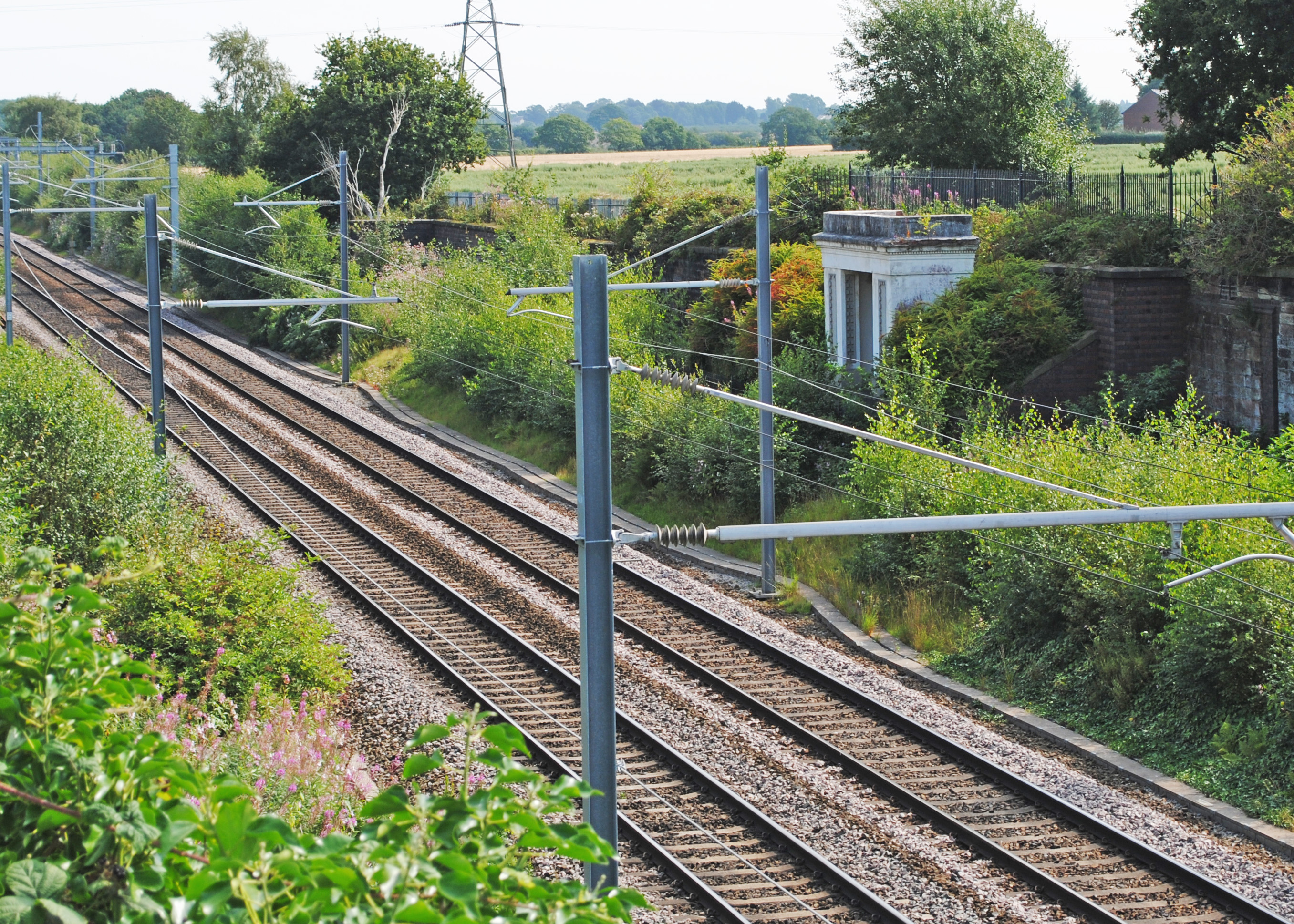
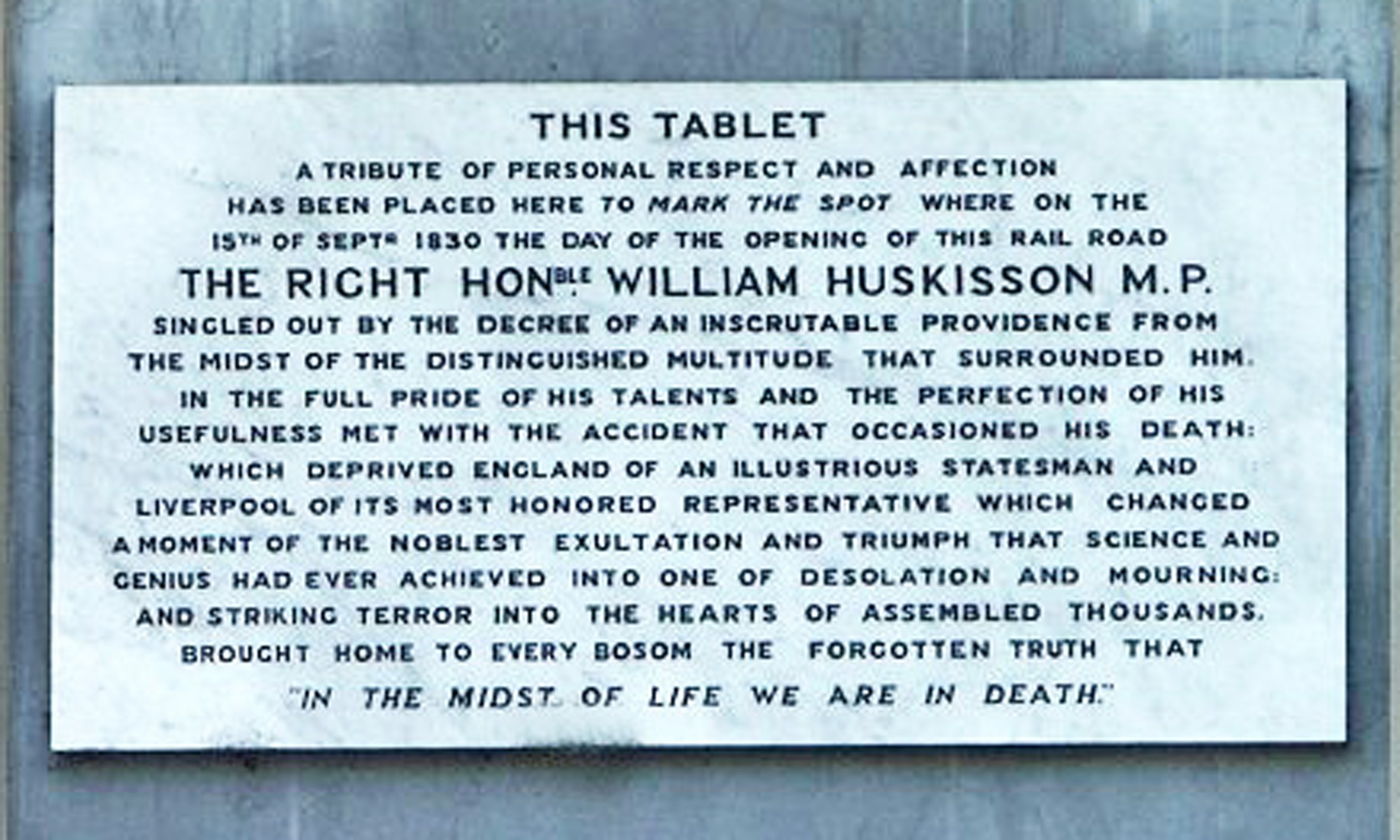
The new railway was recognised as a great engineering achievement and many dignitaries arrived for the opening ceremony. There were MPs, Knights, Lords and Ladies and special dignitaries including the prime minister (Duke of Wellington), the USA Consul, the Russian Ambassador, and Prince Esterhazy of Austria. Eight trains carrying over 800 people set off in great style from Liverpool with thousands of people watching along the route to Manchester. About half way along the route, at Parkside about two miles from Culcheth, the trains stopped to take on water. Grandstands had been erected here for the crowds to watch the spectacle. Several dignitaries, including William Huskisson MP for Liverpool and former Cabinet Minister, stepped down from their carriages and walked along the track to greet the Duke of Wellington. Suddenly there was a warning shout as the Rocket approached at speed on the other track. People scattered but Huskisson fell and his leg was mangled by the Rocket. He was taken to hospital but died shortly after - the world's first fatality by a train. A monument was erected at the place of the accident and still exists by the track. The monument can be seen from the bridge on Parkside Road.
The horrible accident was witnessed by thousands and reported everywhere by newspapers but people were not put off this new, fast mode of transport. The railway became a great success and very profitable and so led to the rapid development of lines throughout this country and the rest of the world. There was such a rush to invest and build railways it was known as 'railway mania' and within 20 years there were thousands of miles of track in England and millions of railway journeys every year.
As part of the ongoing development of railways, Culcheth got its own railway station on a line from Glazebrook to Wigan, which eventually became our Linear Park - but that is another story we will try to cover in another article.