Culcheth Hall
At the top of Culcheth Hall Drive you will see lots of nice big houses. This was once the location of a much bigger mansion. Culcheth Hall stood here for more than 750 years until it was demolished about 1958. It was built by Gilbert de Culcheth in 1201 and later a farm was established near the Hall. It remained in the family until about 1824 when the estate was put up for auction. The buyer was Peter Withington and subsequently it passed to his grandson, squire Thomas Ellames Withington. He was an important figure in the village, well known and respected for his charitable works. When the parish church burned down in April 1903 he was one of the main benefactors getting it rebuilt by 1904. He is honoured by naming a road after him, Withington Avenue.
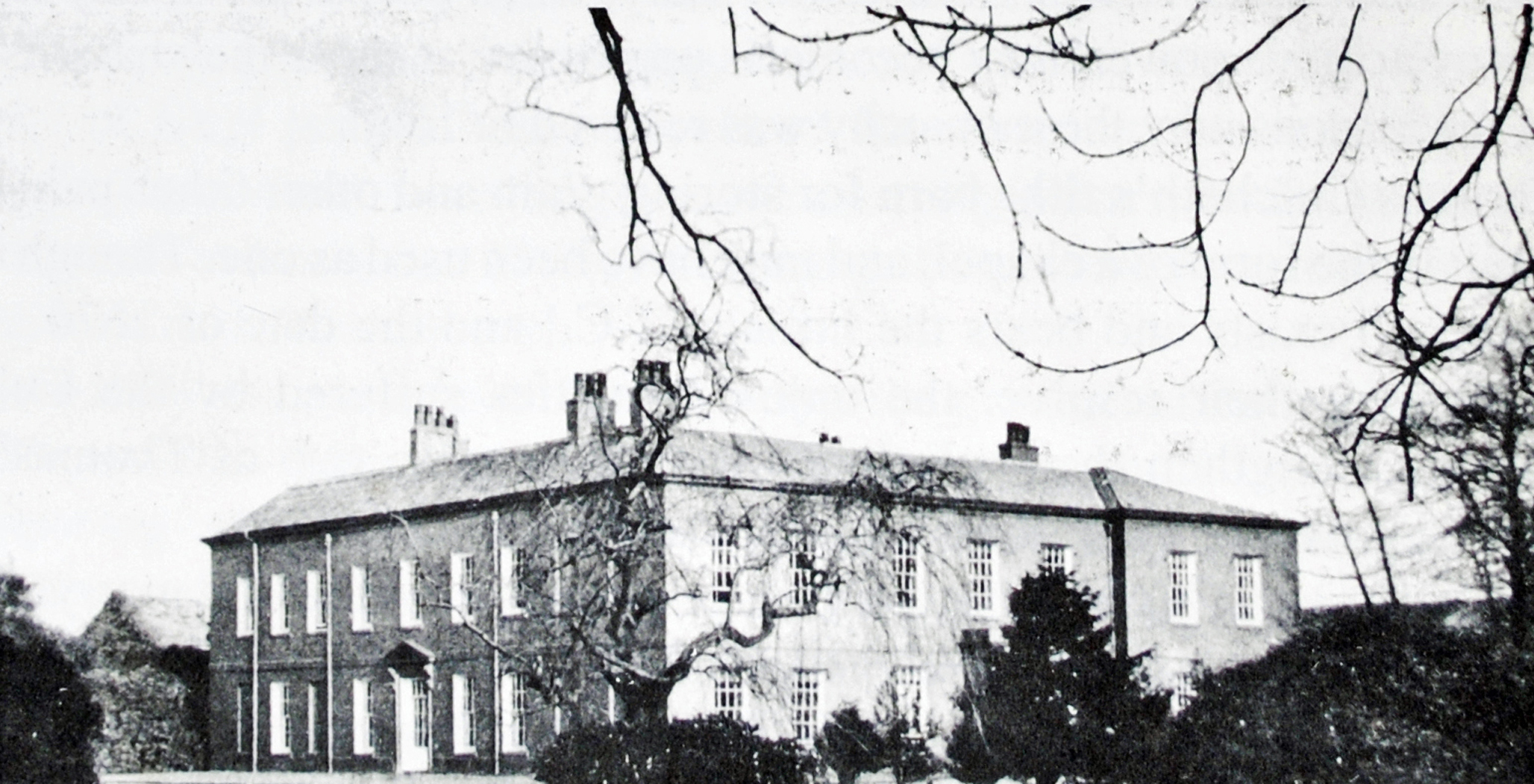
Culcheth Hall was a large property as shown in in this photo:
The long driveway, now called Culcheth Hall Drive, connected the Hall to Warrington Road as shown on this 1928 map:
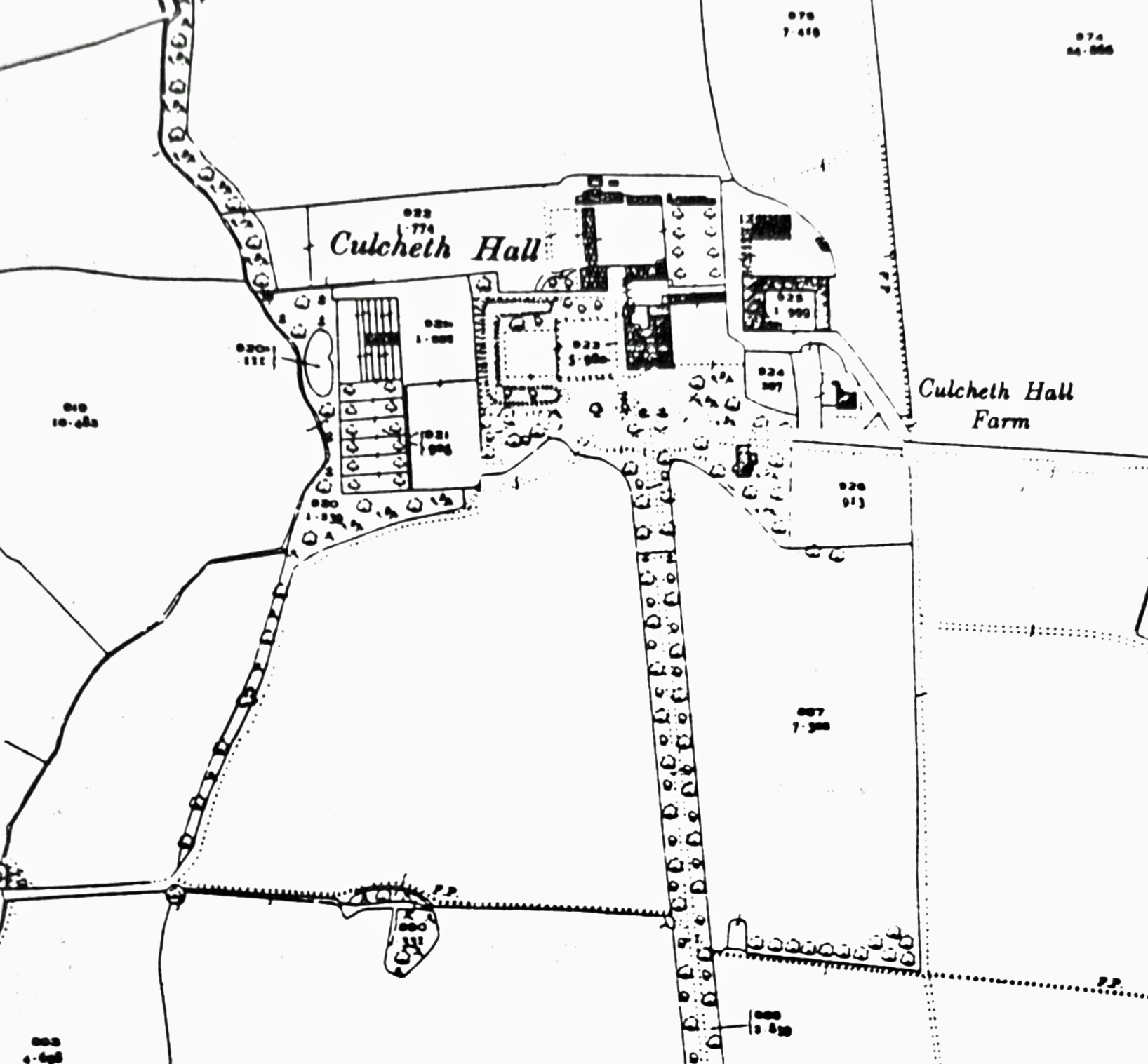
The hall used to have three gate lodges. One was on Warrington Road at the bottom of Culcheth Hall Drive. The second one, opposite the end of Holcroft Lane, was on a path used by horse riders. The third lodge was on the corner of Twiss Green Lane and Common Lane and was the entrance to a footpath leading to the hall. There is now a private house on this corner which seems to be an extension of the original lodge.
In 1921 the estate was inherited by another Thomas Ellames Withington, named the same as his father. At that time he was a Captain in the army and living in St Leonards on Sea. When he married a French woman they settled in France and Culcheth Hall was sold to the Co-operative Society to be used as a holiday home for their employees. During World War Two it was requisitioned and had some American as well British troops there. After the war, the Hall was unused and became derelict. Eventually, in the 1950s, the land was sold and the historic mansion was demolished to make way for modern housing developments.
It was still standing in 1953 and the following is a description from that time, taken from a booklet produced by Newchurch Guides and Brownies as a tribute for the queen's coronation that year.
Walking up the drive you can find the entrance to a tunnel that comes up inside the house. It is well constructed of bricks and big enough for the passage of a man. There was a small chapel in the Hall so perhaps it was a secret escape tunnel for a priest giving mass in the chapel when Catholics were being persecuted. The bell from the chapel now hangs in the Methodist Church in Ellesmere Road and is still in regular use.
Further along the drive there is an old Tythe Barn with a stone engraved TC 1676. The building has a bell tower at one end, probably so it looks more attractive from the windows of the Hall. Here the tythes of corn were collected every year and it also housed a man-trap for catching poachers.
In the back stairs of the Hall there is a stained glass window bearing a coat of arms and the words 'Mon Dien Pren Gar De Dei Moy' (My God, take care of me). The coat of arms, representing the marriage of two families, is a shield showing an eagle carrying a child in its claws (Culcheth family) and a griffon (Trafford family). In the oldest part of the hall, probably built in 13th century, the walls are about 4 feet thick and the passages are flagstones.
Behind the hall is a walled garden and one of the walls has fire holes. It is thought that peaches were grown on the wall and the gardeners would set fires in the holes to ripen off the fruit.
Near the walled garden are barns and out-buildings. One barn is inscribed T E Withington1835. Over the stables and coach house is a bell that was used to summon the farm workers from the fields. There is an inscription 'Time and tide wait for no man'.