Culcheth 1905
What was Culcheth like a 100 years ago. If we looked exactly 100 years ago it would be a period just after the first world war 1914-18, which would have taken a lot of young men out of the village, so let us look to the decade before the war and just after the Victorian era.
Culcheth was a lot smaller then. The total population was about 2,200, about a quarter of today's, so there were fewer houses and the area was more rural. The layout of the main roads, Common Lane, Wigshaw Lane, Hob Hey Lane, Twiss Green Lane, Warrington Road, Church Lane was the same as today. Our village green existed as open land, although then it was called the Common. There were shops in the village centre such as grocer, butcher, post office (now Waterfields) and opposite, across Common Lane, was Leigh Co-op (now Don Luigi). There was a doctor, who practised from his own home on Common Lane, but you would need to pay him for his services. There was also a police station and a local 'bobby'. There were no restaurants in 1905 but, of course, there were pubs such as the Pack Horse, Harrow (now Culcheth Arms) and the Bricklayers Arms (now Cherry Tree) in their current location. The golf course was started in 1906 by a group of golfers from Leigh. Most houses were quite small by modern standards and did not yet have electricity. One notable large house was set back from Warrington Road, in what is now CPS car park. This was an old 17th century house which had once been the Workhouse but in 1905 it was a private house. It had a large sundial on the front, which is why the CPS Centre is called Sundial House.
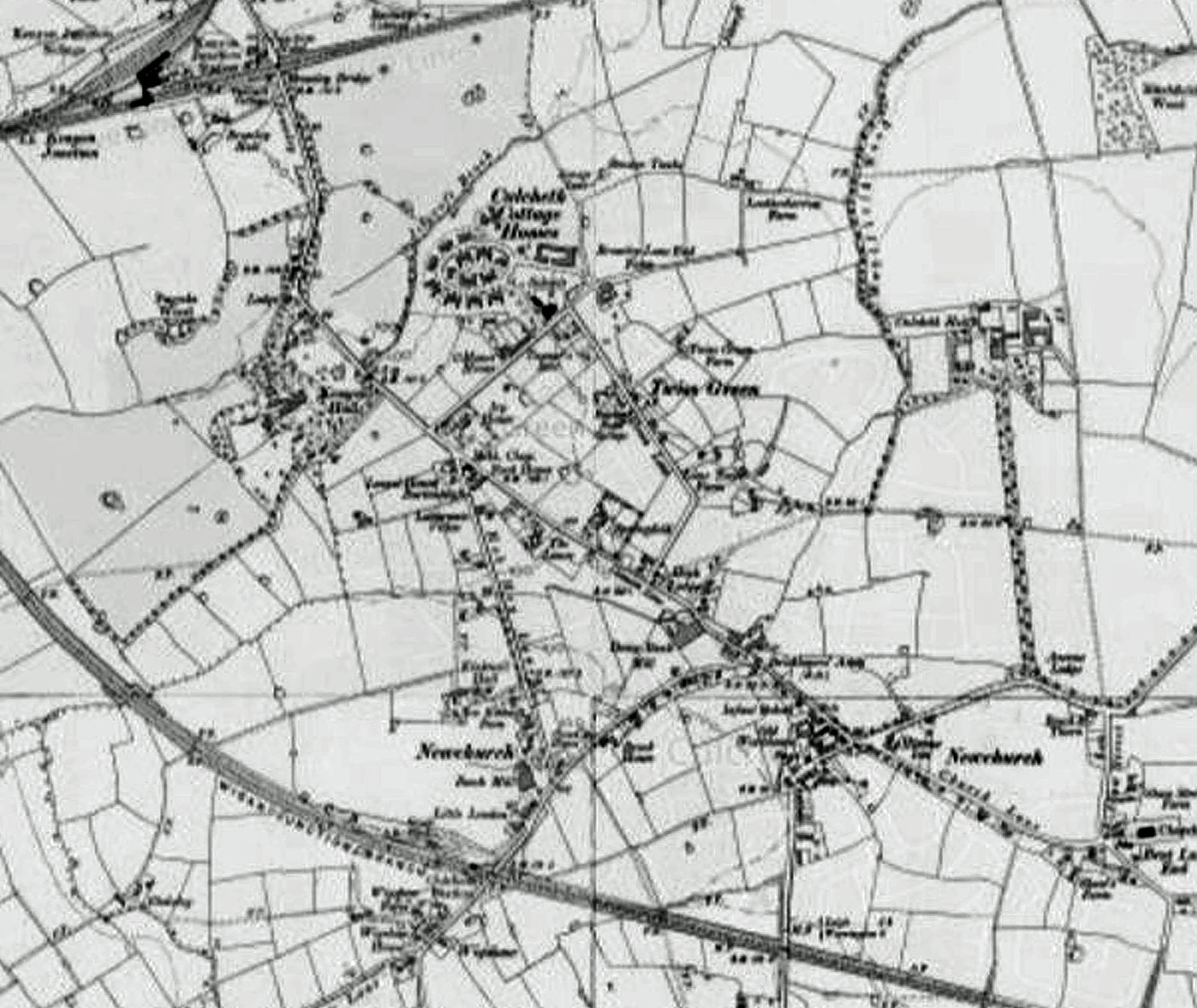
Families were generally bigger than today and it was not unusual to have five or more children. Most people were quite poor and few people owned their own home. Children had to attend school until they were 12 years old and were then expected to start work at a young age to help support the family. Newchurch school, which was built in 1821 and still exists as the parish hall opposite the village green, had an average attendance of 128 plus 55 infants. There was also a private boarding school at Kenyon Hall (now the golf club), catering for about 70 children, mainly from outside the area, who could afford fees. In the area north of Twiss Green Lane, (now Stonyhurst Crescent), was Culcheth Cottage Homes. This was a new development of large houses, workshops, school, farm land, recreation ground and swimming bath for poor and orphan children of Salford funded by the Salford Board of Guardians. It was completed In 1903 and by 1911 it was catering for over 300 inmates and had a staff of 37. Some of the original buildings, including houses, school and water tower have been refurbished and now provide excellent upmarket housing.
Work for most people today is in service industries. In the early 1900s people still made things or worked on the many farms surrounding Culcheth producing wheat, oats or potatoes. There were two Mills in the village weaving cotton goods: Daisy Bank Mill (bottom of Common Lane) and Beech Mill (bottom of Hob Hey Lane), which now just feature as the name of local roads. An earlier generation had done their weaving in their own homes but the process was now industrialised. People would walk to work and goods would be transported by horse and cart because few people could afford motor vehicles, which were a relatively new invention. That meant there was work for the local Blacksmith and Boot Maker. There was a railway station in Culcheth (now the linear park) for goods and people that needed to travel further.
Culcheth still had a 'Lord of the Manor': Captain Thomas Ellames Withington JP residing at Culcheth Hall. Culcheth Hall was demolished after the second world war but we have reminders of those times in the names of Culcheth Hall Drive and Withington Avenue. The local squire was well known and respected in the village for his charitable works. When the parish church burned down in April 1903 he was one of the main benefactors in getting it rebuilt by 1904. The rector of the church was Eugene Whittenbury Kaye residing at the rectory on Warrington Road, which has been greatly extended and refurbished into an even grander house. Generally people were much more religious then than now and most people would attend the parish church or the Methodist Chapel each week.
If our 1905 Culcheth ancestors could return now they would recognise a few buildings in the village but they would be amazed at our relative wealth, cars, gadgets and lifestyle. Perhaps we should now wonder what life will be like in Culcheth a 100 years into the future - or maybe that is just too unimaginable.